The latest news relevant to you and your business


Leading with Kindness: Building a Workplace Where People Feel They Belong
This season offers more than just celebrations; it provides a valuable perspective. In this informative thought piece, our Chief Human Resources Officer, Elisabeth Shaw, shares a powerful reminder that the most meaningful driver of organizational success is how we treat one another.
By leading with kindness, humility, and grace, employers can foster stronger engagement, retention, and a more positive workplace culture that extends well beyond the holidays.
Read how people-first leadership becomes a lasting strategic advantage.
Reminder: Your Complete 2025 Year-End Payroll & 2026 Wage Update Guides
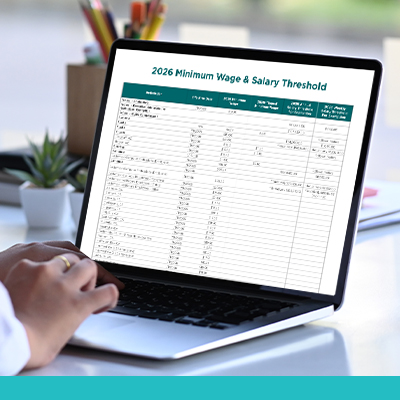
Your Trusted Guide to Year-End Payroll and 2026 Wage Changes
As we close out 2025, now is the ideal time to ensure your business is ready for a seamless start to the new year. PrestigePEO’s 2025 Year-End Payroll Guide and 2026 Minimum Wage & Salary Threshold Updates provide the essential information, timelines, and checklists you need to stay compliant and well-organized.
From final payroll processing and employee data verification to upcoming changes in state wage requirements and exemption thresholds, these resources outline the updates that matter most to your business.
Use these guides to streamline your year-end workflow, reduce compliance risks, and confidently prepare your

Make Tax Season Easier with Digital W-2 Access
Help Your Employees Receive Their W-2s Faster
As year-end approaches, now is the perfect time to remind employees to enroll in electronic W-2 delivery through the PrestigePRO Employee Self-Service portal. Digital W-2s arrive 2–3 weeks earlier than mailed forms and can be accessed at any time.
Encourage your team to enroll by December 31, 2025, to ensure they receive their W-2 electronically this year. Email reminders will be sent to employees who have not yet completed their enrollment. For assistance, your Payroll Specialist is here to help.
Important 2025 FSA Year-End Reminders
Key FSA Roll-Over Rules and Deadlines for 2026
Please remind your employees of the essential rules for their 2025 Flexible Spending Accounts (FSA).
Employees may roll over up to $660 from 2025 to 2026 only if they re-enroll in the PrestigePEO FSA program for 2026 and elect a minimum contribution of $100.
- Please note: Dependent Care FSA funds cannot be rolled over.
Employees will have 90 days after the end of the year to submit any eligible 2025 FSA claims. Those with remaining funds can use them on eligible items through online retailers such as FSAstore.com or Amazon (search “health spending eligible items”).
Employees can view their current FSA balance at any time by visiting OptumFinancial.com. If you have any questions, please get in touch with your dedicated Benefits Specialist or Benefits Account Manager.

Introducing the Genesis Mission: Expanding Access to Advanced AI
A New National AI Initiative Empowering Small and Mid-Sized Businesses
The Genesis Mission is a new federal initiative designed to accelerate scientific and technological innovation by consolidating federal datasets, supercomputing resources, and advanced AI tools into a unified national infrastructure.
By opening this powerful ecosystem to collaboration among government, academia, and the private sector, the initiative aims to make high-end AI capabilities more accessible, particularly for small and mid-sized businesses (SMBs). For SMBs, the Genesis Mission could help lower the cost of adopting AI technologies, support the development of new products and services, and create opportunities to participate in groundbreaking research.
This expanded access levels the playing field, enabling smaller organizations to compete more effectively in an increasingly technology-driven marketplace. If you’re interested in learning more, click the link below.

2025 Year-End 401(k) Deadlines & Contribution Guidance
Important 401(k) Updates and Key Deadlines for 2025–2026
As you prepare for year-end, please review our updated 401(k) contribution deadlines and regulatory changes for 2025–2026.
From K-1 contribution timelines and new Roth catch-up requirements to updated 402(g) limits, profit-sharing deadlines, and true-up schedules, this resource outlines what employers need to know to remain compliant and ready for tax season.

Protecting Your Business Through Proactive Compliance
With state and federal regulations evolving rapidly, PrestigePEO delivers the timely information and expert guidance you need to stay protected. This month’s compliance update highlights key changes and actionable recommendations to help you navigate risk and support your workforce.
The ACA Subsidy Expiration and the Potential Impact on Health Premiums
As 2026 draws near, many across the country have expressed concern with the potential expiration of the subsidies, established by the Affordable Care Act (ACA), that partially cover premium costs for enrollees. The ACA established these subsidies based on premiums for the second lowest-cost “silver” plan, or the “benchmark plan” and, since 2014, enrollees could receive subsidies equal to a fixed share of income that would be set to the benchmark plan, with the fixed share of income rising with income. These subsidies were increased temporarily from 2021 through 2025 by the American Rescue Plan Act and the Inflation Reduction Act. These enhanced subsidies cover the full cost of a benchmark premium for those between 100% and 150% of federal poverty level.
The ACA subsidies provided tremendous relief to enrollees and expanded access to healthcare coverage which further brought down coverage pricing. However, these subsidies are set to expire at the end of 2025 and were one of the main sticking points of the historic government shutdown this past fall. The expiration of these subsidies could have a significant impact on the amount health insurers charge for coverage in ACA Marketplaces and on enrollees.
- For states that run their own healthcare marketplaces, the increase could be up to 17%
- For states that use healthcare.gov for coverage offerings, the increase is expected to be around 30%
- For enrollees that are currently subsidized, the increase in premium payments could be upwards of 114%
To illustrate this increase, a family of four, earning $130,000, would have their monthly premiums increase from $921-$1,998 (calculated off the benchmark plan premiums). This sharp increase in premiums could push millions out of the marketplace and, in turn, further raise costs for those with coverage. The Congressional Budget Office (CBO) estimated that there could be the potential for a 3.5 million decrease in employment-based coverage and that the number of uninsured people could rise by 3.8 million each year over the 2026-2034 period.
The impact on employers and enrollees across the country will be substantial if the ACA subsidies are allowed to expire. However, there has been traction from both President Trump and Republicans in Congress and the Senate as there has been engagement from both sides over the extension of the subsidies. Legislators have until December 31st to pass legislation to extend or solidify the ACA subsidies and a three-year proposal and enhancement will be forced to the Senate floor for a vote as early as next week.
As always, PrestigePEO is here to help with any healthcare coverage and compliance needs. For questions regarding these new regulations or other matters, please contact your HRBP for assistance.
Is Secure 3.0 on the Horizon for the Benefits Industry?
Just three years after the passage of SECURE 2.0 in 2022, there may be a rise in bipartisan support again for a SECURE 3.0 bill. SECURE 2.0 (Setting Every Community Up for Retirement Enhancement Act) was included the Consolidated Appropriations Act of 2023 and signed into law by President Joe Biden. It was intended to strengthen and bolster the protections of the original SECURE Act and take another meaningful step toward the improvement of an individual’s ability to save for retirement, expand access to retirement plans, and ease plan administration for employers. While not without its complexities and challenges, the runout of the final provisions of SECURE 2.0 could provide the baseline for SECURE 3.0 as the retirement industry continues to adapt.
As a refresher, some of the key provisions included in SECURE 2.0 provided automatic enrollment requirements in employer 401(k) plans, early withdrawal, expanded catch-up contributions, student loan retirement match solutions, long-time part-time employee eligibility, and a federal matching for retirement contributions for individuals earning below a certain threshold. Most of the provisions became effective in 2024; however, some provisions came into effect this year or will be in 2026-2027. The key provisions that came into effect in 2025 are provided below, along with the provisions that will be coming into effect in 2026-2027.
Provisions Effective in 2025
- Expansion of automatic enrollment for 401(k) and 403(b) plans with the enrollment amount starting between 3-10% and increasing by 1% each year until it reaches 10-15%.
- Increases to catch-up limits to the greater of $10,000 or 50% more than the regular catch-up amount in 2025 for individuals ages 60-63.
- Reduction of the requirement for long-time part-time from three years down to two years to allow part-time workers to participate in employer 401(k) plans and ERISA-covered 403(b) plans
- The long-time part-time rule requires that any part-time employee who has worked over 1,000 hours in one year or at least 500 hours in two consecutive years would be automatically eligible for their employer’s 401(k).
- Requiring the DOL to create a retirement savings lost and found that allows participants to search a database for retirement plans. It also requires plan administrators to provide annual reporting of disposition balances for vested terminated participants.
Provisions to be Implemented in 2026
- Mandatory Roth IRA Catch-Up Contributions:
- Retirement plan participants aged 50 or older with prior-year Social Security wages exceeding $145,000 (indexed for inflation) must make catch-up contributions to a Roth account within the retirement plan rather than a pre-tax account.
- Paper Statement Requirements:
- Defined contribution plans are required to provide plan participants with at least one paper statement per calendar year
- Retirement plans must be amended to incorporate SECURE 2.0 changes by December 31, 2026 (except government and collectively bargained for plans)
Provision Effective in 2027
- Changes to the Saver’s Credit to a federal match deposited into the taxpayer’s IRA or retirement plan, and increases the eligibility for this match
As these provisions continue to come into effect and the retirement landscape evolves and changes, lawmakers have already begun discussions to follow a similar approach to the drafting of SECURE 2.0 in order to make even more improvements to the retirement system and make tweaks to various components of the prior SECURE bills. While these provisions continue to roll out and tax, budget, and cost of living remain to be the primary concerns of Congress, most meaningful conversations about new retirement legislation will remain on the back burner for the foreseeable future.
However, some points and concerns have been raised, and some stakeholders have already engaged with Congress to discuss what SECURE 3.0 could look like. Additionally, some members of Congress have since proposed individual bills addressing aspects of the retirement system and its rules to make it more beneficial and attractive for employers, employees, and other players in the industry. Engagement from industry representatives and individual bills, presented by elected officials, have served as the baseline for previous SECURE Acts, as these individual bills were packaged together and bolstered with industry-specific insight and policy. It seems apparent that Congress is intent on following this pattern again as new leadership and priorities begin to evolve moving into 2026.
As of now, there is no definite plan for SECURE 3.0, but several potential provisions for SECURE 3.0 may include:
- Enhanced automatic enrollment
- Expanded catch-up contributions for older employees to contribute
- Improved access to part-time and gig workers by lowering eligibility requirements and creating new retirement options targeted for these groups of workers
- Default investment options for IRAs to simplify investment choice and increase participation
- Lifetime income options through retirement plans and annuities
- Simplification of rollovers and transferring retirement savings between accounts
While lawmakers and stakeholders begin the discussion to lay the foundation for SECURE 3.0, employers and employees should be aware of the effective provisions prescribed by SECURE 2.0 to ensure that any mandatory provisions are adhered to and offered, as well as any option provisions that may provide benefits and protections to participants and employers.
As always, PrestigePEO is here to help with any compliance needs. For questions regarding these new regulations or other matters, please contact your HRBP for assistance.
New York City Council Approves Pay Data Reporting Requirements
The New York City Council has recently passed two bills that, if enacted, would require private employers with 200 or more employees in New York City to submit annual reports detailing pay and demographic information. Additionally, a designated city agency would be tasked with conducting a pay equity study based on this data.
The legislation, approved by the Council on October 9 and vetoed by Mayor Adams on November 7, is still expected to become law. The initial legislation passed the City Council with 80% of the vote, which is more than needed to override the recent mayoral veto. Upon enactment, the laws will take immediate effect, though employers will be afforded time before their first reporting deadline.
New York City has been evaluating pay data reporting initiatives for many years, and since the pay data reporting bill’s introduction in 2024, the scope of the bill has been revised, limiting its application to larger employers and reducing the amount of required data. If enacted, employers with 200 or more employees working in New York City would be mandated to report pay and demographic details.
Specifically, employers would be obliged to submit comprehensive pay and demographic information aligned with the categories specified by the EEOC’s EEO-1 Component 2 reporting requirements for the 2017 and 2018 reporting periods, which mandate compensation data by race/ethnicity and gender. The legislation also authorizes the city to modify reporting criteria, including options accommodating different gender identities. Employers may provide explanatory statements regarding the submitted data as part of their report.
Submission of pay data will not be required immediately. Within one year of the effective date, the mayor must appoint an agency to conduct the pay equity study. Following agency designation, there will be one additional year for the agency to develop a standardized reporting form for employer use. Subsequently, employers will be required to submit annual pay reports to the designated agency beginning within the next year after the form’s deployment.
Employers must also submit a signed attestation affirming both the filing and the accuracy of the data contained in the pay report. Noncompliance will result in the publication of the employer’s deficiency on the agency’s website. However, employers will have a 30-day period to amend and confirm the accuracy of their information upon notification of noncompliance, which would result in a written warning. Further, civil penalties are stipulated for continued violations and failure to cure the violation within the given time frame. For a first offense, an employer avoiding correction within 30 days will incur a $1,000 penalty, whereas subsequent offenses will result in a $5,000 penalty.
The second portion of the two-part legislation involves the Pay Equity Study bill, which will require the designated agency to utilize the reported pay data information to conduct a pay equity study in conjunction with the New York City Commission on Gender Equity and other stakeholders within one year after the pay equity reports are submitted.
PrestigePEO is here to help. We will continue to monitor the passage of this anticipated legislation and provide updates accordingly. Please contact your HRBP with any questions.
Implications of Galarza for Employers in the Eleventh Circuit (Alabama, Florida, Georgia)
On October 16, 2025, the U.S. Court of Appeals for the Eleventh Circuit, which covers Alabama, Florida, and Georgia, issued a significant decision in the case of Galarza, Wimberly & Carpenter v. One Call Claims, LLC and Texas Windstorm Insurance Association (TWIA). This case arose after Hurricane Harvey, when One Call Claims engaged licensed insurance adjusters to assist TWIA in managing a surge of claims. Although these adjusters signed independent contractor agreements and were compensated with flat daily rates, they later filed a lawsuit, claiming that they were employees under the Fair Labor Standards Act (FLSA) and entitled to overtime pay.
Initially, the district court sided with the companies, ruling that the adjusters were independent contractors. However, upon appeal, the Eleventh Circuit reversed this decision. The court determined that a jury could reasonably conclude that the workers were “economically dependent” on the companies. This means that they may legally qualify as employees under the FLSA, despite being labeled as contractors and having different agreements or tax classifications.
The court highlighted that the FLSA’s definition of “employee” is intentionally broad. A worker might be classified as an independent contractor for tax purposes or under other laws but could still be considered an employee for FLSA requirements. Ultimately, courts must assess the economic reality of the working relationship, rather than focusing solely on job titles, contract wording, or 1099 status.
In summary, the crucial factor is not what the documentation labels a worker, but whether they function as an employee who relies on the business for their livelihood.
Labels Don’t Control the Outcome
In the case of Galarza, the court highlighted that even though workers were classified as independent contractors and their assignments were labeled “temporary,” the actual nature of the relationship is what determines classification, rather than just the written descriptions.
How the Court Applied the Six-Factor Economic Reality Test
The Eleventh Circuit concluded that five out of the six factors indicated that the workers should be considered employees:
- Control: TWIA established schedules, required timesheets, directed daily tasks, restricted work on Sundays, and allegedly monitored remote performance.
- Opportunity for Profit or Loss: Workers received fixed, non-negotiable daily rates and could not increase their earnings through business decisions.
- Investment: The companies provided essential equipment and access to necessary systems, while expenses incurred by the workers were primarily personal.
- Skill: Although the workers were licensed and experienced, their skills did not outweigh the significant level of control and dependence exerted by the companies.
- Permanency & Exclusivity: Assignments lasted between 1.5 to 2 years, were open-ended, and did not involve the workers serving other clients.
- Integral Work: Adjusting claims was a fundamental part of the core operations of both companies.
What Employers Should Do Now
- Review the roles of contractors who perform core business functions.
- Ensure that day-to-day practices align with the independent contractor model.
- Reassess flat day-rate or weekly-rate payment structures.
- Evaluate the duration and exclusivity of contractor assignments, as well as remote monitoring practices.
- Consult with employment counsel and train managers on proper engagement with contractors.
Bottom line: If workers behave like employees, courts may treat them as employees and FLSA obligations will follow.
PrestigePEO is here to help. We will continue to monitor developments in this area and provide updates accordingly. Please contact your HRBP with any questions.
Illinois to Implement AI Rules in 2026
Illinois will implement new regulations on the use of artificial intelligence in employment starting January 1, 2026, under House Bill 3773. The law, in addition to the Illinois Human Rights Act, aims to prevent AI from producing discriminatory results in hiring, promotions, and other employment decisions.
The new rules prohibit AI systems from discriminating against protected groups, including race, gender, age, or disability, and explicitly ban the use of ZIP codes as a proxy for race. Employers must inform candidates and employees when AI is used in employment decisions, explaining its purpose and the impact it has on outcomes.
The Illinois Department of Human Rights will enforce the law, and individuals who believe they have experienced AI-driven discrimination can file complaints that might lead to civil rights claims with potential damages. While formal bias audits are not mandatory, employers are encouraged to review AI systems, monitor results, and document compliance efforts.
The law applies to all employers in Illinois and covers hiring, promotion, training, discipline, and other employment actions. Illinois is among the first states to comprehensively regulate AI in the workplace, signaling increased accountability for automated decisions. Employers who start assessing AI tools and implementing transparent policies now will reduce legal risks and promote fair treatment for all applicants and employees.
PrestigePEO is here to assist. Please contact your HR Business Partner with any questions about these regulations and how they may affect your organization.
Virginia’s Proposed AI Regulation and Federal Standards
Regulation of artificial intelligence is advancing quickly at both the federal and state levels. Employers operating in multiple states, including Virginia, may soon face new requirements for disclosure, audits, and risk management.
At the federal level, lawmakers are considering a unified AI standard to prevent a patchwork of inconsistent state regulations. Options include restricting state-level AI laws through the National Defense Authorization Act (NDAA) or creating a standalone federal framework. Even if a federal standard is adopted, states will likely continue to regulate AI, especially for high-risk uses such as employment screening and monitoring tools.
Virginia plans to reintroduce AI legislation in 2026, initially focusing on the healthcare sector. Proposed requirements include disclosing AI use, conducting risk assessments for high-risk tools, clearly indicating when AI influences decisions, and possibly enforcement by the Attorney General. Earlier versions of the Virginia bill did not allow private lawsuits, though limited private enforcement might be considered for specific cases.
Multi-state employers should prepare for a growing patchwork of regulations from California, Colorado, Illinois, New York, and Virginia. Recommended actions include mapping AI tools, monitoring state-specific rules, developing bias-testing procedures, reviewing AI vendor contracts, and establishing AI governance teams.
By taking proactive steps now, employers can better manage upcoming AI requirements while reducing compliance risks and potential liabilities.
PrestigePEO will continue to monitor developments that impact your workplace. Please get in touch with your HR Business Partner with any questions.
Final Reminder: PrestigePEO Pulse Newsletter: Year-End Employee Updates
Last Chance to Opt-Out of The PrestigePEO Pulse Newsletter
This is your final reminder that our annual PrestigePEO Pulse Newsletter will be distributed to your employees in December.
This year-end resource provides helpful updates on W-2 access, maximizing FSA benefits, and key features available in the PrestigeGO mobile app.
If you prefer that your employees DO NOT receive the 2025 Pulse Newsletter, please use the Opt-Out link below to update your communication preferences.
Note: Complete the opt-out form by Wednesday, December 17, 2025.

2025 New York Employment Law Updates & What to Expect in 2026
Catch Up on the Latest NYS & NYC Employment Law Updates
New York employers are facing major regulatory updates in 2025 and 2026. If you missed our recent session with PrestigePEO’s legal experts, catch the full recording to learn about the changes, what’s required, and how to prepare with confidence.
Watch the webinar for a clear breakdown of NYS and NYC employment law updates, upcoming deadlines, and key compliance actions employers need to take.

Support Your Caregivers with Motivity Care
A Personalized Caregiving Resource Your Employees Can Rely On
Motivity Care provides your employees with expert, one-on-one support to help them navigate the challenges of caring for aging parents, children, or loved ones. From care planning and provider coordination to emotional support and resource navigation, Motivity Care empowers caregivers with the guidance they need, reducing stress and improving overall well-being.
This unique offering enables employers to support a growing caregiving population while enhancing productivity, engagement, and retention.

Monument: Confidential Support for Healthier Habits
Monument provides employees with a confidential, science-backed program designed to support healthier choices around alcohol.
The platform offers virtual support groups, an engaged community forum, and online tools, all accessible from home. Employees can also schedule insurance-covered appointments with licensed therapists and physicians for personalized treatment and ongoing guidance.

Earn Up to $2,500 With the PrestigePEO Referral Program
Know a business that could benefit from stronger HR support, premium employee benefits, and reliable compliance guidance? Refer them to PrestigePEO and earn up to $2,500 for every qualified referral, with no limit on how many rewards you can receive.
Your referrals help other organizations access the high-touch service they deserve while allowing you to earn meaningful rewards. It’s a win for you and a win for the businesses you help connect to PrestigePEO.